

- University
- Academic
- Schools/Vocational Schools
- Vocational School of Justice
- Vocational School
- Vocational School
- Department of Banking and Insurance (Turkish)
- Department of Computer Programming (Turkish)
- Department of Foreign Trade (Turkish)
- Department of Graphic Design (Turkish)
- Department of Interior Design (Turkish)
- Department of Construction Technology (Turkish)
- Department of Occupational Health and Safety (Turkish)
- Department of Media and Communication (Turkish)
- Department of Architectural Restoration (Turkish)
- Department of Radio and Tv Programming (Turkish)
- Department of Civil Aviation Cabin Services (Turkish)
- Department of Civil Aviation Transportation Management (Turkish)
- Department of Tourism and Hotel Management (Turkish)
- Department of Applied English Translation
- Vocational School Of Health Services
- Vocational School Of Health Services
- Department of Child Development (Turkish)
- Department of Physiotherapy (Turkish)
- Department of Paramedic (Turkish)
- Department of Opticianry (Turkish)
- Department of Medical Documentation and Secreteriat (Turkish)
- Department of Medical Imaging Techniques (Turkish)
- Department of Medical Laboratory Techniques (Turkish)
- Department of Elderly Care (Turkish)
- School of Applied Management Sciences
- School of Foreign Languages
- Faculties
- Faculty of Arts and Sciences
- Faculty of Fine Arts and Design
- Faculty of Law
- Faculty of Communication
- Faculty of Business
- Faculty of Engineering
- Faculty of Engineering
- Department of Computer Engineering
- Department of Biomedical Engineering
- Department of Electrical and Electronics Engineering
- Department of Industrial Engineering
- Department of Food Engineering
- Department of Genetics and Bioengineering
- Department of Aerospace Engineering
- Department of Civil Engineering
- Department of Mechanical Engineering
- Department of Mechatronics Engineering
- Department of Software Engineering
- Faculty of Health Sciences
- Medicine
- Graduate School
- Common Courses
- Schools/Vocational Schools
- Research
- Research Centers
- Library
- Smart Campus
- Technology Transfer Office
- İzmir Sciencepark
- Continuous Education Center (EKOSEM)
- Children's University
- Ethics Committee
- Teaching and Learning Center (EKOEĞİTİM)
- Psychology Application and Research Center
- Researcher Training Coordinatorship
- Research Collaborations And Innovation Coordinatorship
- Campus
- INTERNATIONAL
- Contact
- 25TH YEAR
Department of Mathematics
ITF 460 | Course Introduction and Application Information
| Course Name |
New Financial Ecosystem and FinTech
|
|
Code
|
Semester
|
Theory
(hour/week) |
Application/Lab
(hour/week) |
Local Credits
|
ECTS
|
|
ITF 460
|
Fall/Spring
|
3
|
0
|
3
|
5
|
| Prerequisites |
None
|
|||||
| Course Language |
English
|
|||||
| Course Type |
Elective
|
|||||
| Course Level |
First Cycle
|
|||||
| Mode of Delivery | - | |||||
| Teaching Methods and Techniques of the Course | Lecture / Presentation | |||||
| National Occupation Classification | - | |||||
| Course Coordinator | ||||||
| Course Lecturer(s) | ||||||
| Assistant(s) | ||||||
| Course Objectives | With the development of digital banking and communication tools global financial sector is increasingly facing huge disruption. Additionally, with the change in consumer preferences, young generation will prefer mostly mobile technologies for their financial needs rather than face to face to meet. The Fintech is short for finance & technology and is a disruptive issue in the field of financial services. This course aims to provide students with the basic and intermediary level of knowledge and skills required by the Fintech as an emerging discipline. This course also aims to explore how finance is re-shaped by the advances in communication and technology. |
| Learning Outcomes |
The students who succeeded in this course;
|
| Course Description | The course contains the new financial ecosystem and the future of financial services. The course is supported by real-world cases and best-practices illustrating the themes of technology, business, and finance. These cases take an in-depth look at relevant topics to help describe and analyze the full breadth of the FinTech field. |
| Related Sustainable Development Goals |

|
|
|
Core Courses | |
| Major Area Courses | ||
| Supportive Courses | ||
| Media and Management Skills Courses | ||
| Transferable Skill Courses |
WEEKLY SUBJECTS AND RELATED PREPARATION STUDIES
| Week | Subjects | Related Preparation |
| 1 | Introduction to FinTech: Evolution of Financial Intermediation; FinTech 1.0–4.0 | Survey of Fintech 2026 Release Chapter 1 |
| 2 | Thinking FinTech through Financial Functions: Platforms, Data, Embedded Finance and the New Financial Firm | Survey of Fintech 2026 Release Chapter 1 |
| 3 | Ledger, Trust and Settlement: Blockchain/DLT, Consensus, Finality, Interoperability and Smart Contracts | Survey of Fintech 2026 Release Chapter 2 |
| 4 | Digital Payments, Open Banking, API Economy and Digital Identity | Survey of Fintech 2026 Release Chapter 3 |
| 5 | Bitcoin, Crypto-assets, Ethereum and DeFi: New Market Structures | Survey of Fintech 2026 Release Chapter 5 |
| 6 | Stablecoins, CBDCs and Digital Money Architecture | Survey of Fintech 2026 Release Chapter 6; Tokenisation of Money From Fiat Currencies to Stablecoins pg 491-501 |
| 7 | AI/ML and the Transformation of Financial Intermediation | Survey of Fintech 2026 Release Chapter 8 |
| 8 | Midterm Exam | |
| 9 | GenAI and Agentic Finance: From Algorithms to Autonomous Financial Agents | Survey of Fintech 2026 Release Chapter 8-9 |
| 10 | Cyber Risk as Financial Risk: AI, Fraud, Operational Resilience and Digital Contagion | Survey of Fintech 2026 Release Chapter 8-9 |
| 11 | Tokenisation of Financial and Real-World Assets, Tokenised Deposits, Securities, Collateral and Programmable Finance | Tokenisation of Money From Fiat Currencies to Stablecoins pg 451-471 |
| 12 | BigTech, Platform Finance, RegTech/SupTech and Financial Inclusion | The Regtech Book, 2019 Chapter 11 |
| 13 | FinTech, Geopolitics and Financial Sovereignty: Türkiye ,Central Asia and Digital Financial Rails , Post-FinTech: Finternet, Programmable Finance, Autonomous Finance | Survey of Fintech 2026 Release Chapter 14 |
| 14 | Case Competition & Project Presentations | |
| 15 | Case Competition & Project Presentations | |
| 16 | Final Exam |
| Course Notes/Textbooks | Survey of Fintech by John Nofsinger, Sean Stein Smith and Yosef Bonaparte, 2026 Lecturer’s Notes
|
| Suggested Readings/Materials | The FINTECH Book: The Financial Technology Handbook for Investors, Entrepreneurs and Visionaries, Susanne Chishti & Janos Barberis, Wiley ISBN: 978-1-119-21887-6 The Wealthtech Book, Susanne Chishti & Thomas Puschmann Wiley, 2018 ISBN-10 : 1119362156 The RegTech Book Editor(s):Janos Barberis, Douglas W. Arner, Ross P. Buckley, 2019 ISBN:9781119362142 Fintech for Dummies, Steven O’Hanion & Susanne Chishti, A Wiley Brand, 2020 FinTech Innovation: From Robo-Advisors to Goal Based Investing and Gamification, Paolo Sironi, Wiley, 2016 BIS Website (subject to frequent updating and to be informed by the Course Lecturer) |
EVALUATION SYSTEM
| Semester Activities | Number | Weigthing |
| Participation | ||
| Laboratory / Application | ||
| Field Work | ||
| Quizzes / Studio Critiques | ||
| Portfolio | ||
| Homework / Assignments | ||
| Presentation / Jury |
1
|
20
|
| Project |
1
|
40
|
| Seminar / Workshop | ||
| Oral Exams | ||
| Midterm |
1
|
40
|
| Final Exam | ||
| Total |
| Weighting of Semester Activities on the Final Grade |
2
|
60
|
| Weighting of End-of-Semester Activities on the Final Grade |
1
|
40
|
| Total |
ECTS / WORKLOAD TABLE
| Semester Activities | Number | Duration (Hours) | Workload |
|---|---|---|---|
| Theoretical Course Hours (Including exam week: 16 x total hours) |
16
|
3
|
48
|
| Laboratory / Application Hours |
16
|
0
|
|
| Study Hours Out of Class |
16
|
2
|
32
|
| Field Work |
0
|
||
| Quizzes / Studio Critiques |
0
|
||
| Portfolio |
0
|
||
| Homework / Assignments |
0
|
||
| Presentation / Jury |
1
|
10
|
10
|
| Project |
1
|
30
|
30
|
| Seminar / Workshop |
0
|
||
| Oral Exam |
0
|
||
| Midterms |
1
|
30
|
30
|
| Final Exam |
0
|
||
| Total |
150
|
COURSE LEARNING OUTCOMES AND PROGRAM QUALIFICATIONS RELATIONSHIP
|
#
|
Program Competencies/Outcomes |
* Contribution Level
|
|||||
|
1
|
2
|
3
|
4
|
5
|
|||
| 1 |
To be able to have a grasp of basic mathematics, applied mathematics or theories and applications of statistics. |
-
|
-
|
-
|
-
|
-
|
|
| 2 |
To be able to use advanced theoretical and applied knowledge, interpret and evaluate data, define and analyze problems, develop solutions based on research and proofs by using acquired advanced knowledge and skills within the fields of mathematics or statistics. |
-
|
-
|
-
|
-
|
-
|
|
| 3 |
To be able to apply mathematics or statistics in real life phenomena with interdisciplinary approach and discover their potentials. |
-
|
-
|
-
|
-
|
-
|
|
| 4 |
To be able to evaluate the knowledge and skills acquired at an advanced level in the field with a critical approach and develop positive attitude towards lifelong learning. |
-
|
-
|
-
|
-
|
-
|
|
| 5 |
To be able to share the ideas and solution proposals to problems on issues in the field with professionals, non-professionals. |
-
|
-
|
-
|
-
|
-
|
|
| 6 |
To be able to take responsibility both as a team member or individual in order to solve unexpected complex problems faced within the implementations in the field, planning and managing activities towards the development of subordinates in the framework of a project. |
-
|
-
|
-
|
-
|
-
|
|
| 7 |
To be able to use informatics and communication technologies with at least a minimum level of European Computer Driving License Advanced Level software knowledge. |
-
|
-
|
-
|
-
|
-
|
|
| 8 |
To be able to act in accordance with social, scientific, cultural and ethical values on the stages of gathering, implementation and release of the results of data related to the field. |
-
|
-
|
-
|
-
|
-
|
|
| 9 |
To be able to possess sufficient consciousness about the issues of universality of social rights, social justice, quality, cultural values and also environmental protection, worker's health and security. |
-
|
-
|
-
|
-
|
-
|
|
| 10 |
To be able to connect concrete events and transfer solutions, collect data, analyze and interpret results using scientific methods and having a way of abstract thinking. |
-
|
-
|
-
|
-
|
-
|
|
| 11 |
To be able to collect data in the areas of Mathematics or Statistics and communicate with colleagues in a foreign language. |
-
|
-
|
-
|
-
|
-
|
|
| 12 |
To be able to speak a second foreign language at a medium level of fluency efficiently. |
-
|
-
|
-
|
-
|
-
|
|
| 13 |
To be able to relate the knowledge accumulated throughout the human history to their field of expertise. |
-
|
-
|
-
|
-
|
-
|
|
*1 Lowest, 2 Low, 3 Average, 4 High, 5 Highest


NEWSALL NEWS


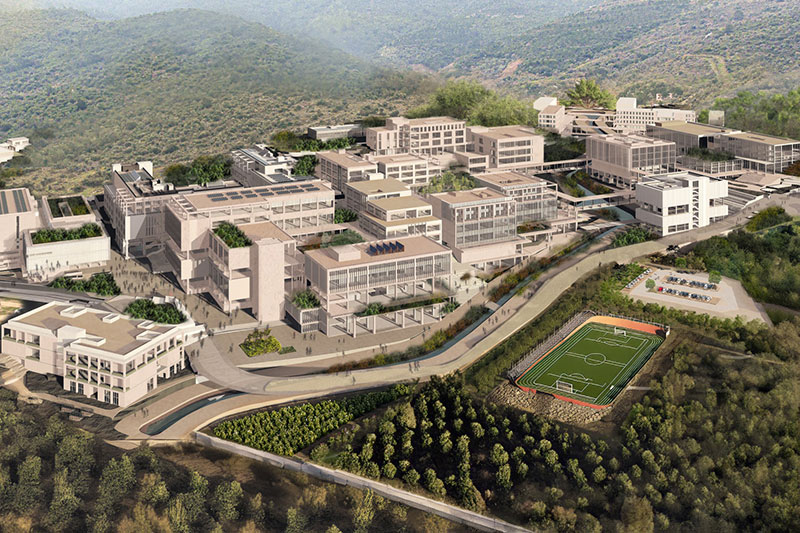
IZMIR UNIVERSITY OF ECONOMICS GÜZELBAHÇE CAMPUS
DetailsGLOBAL CAREER
As Izmir University of Economics transforms into a world-class university, it also raises successful young people with global competence.
More..CONTRIBUTION TO SCIENCE
Izmir University of Economics produces qualified knowledge and competent technologies.
More..VALUING PEOPLE
Izmir University of Economics sees producing social benefit as its reason for existence.
More..
You are one step ahead with your graduate education at Izmir University of Economics.